Before we explore various aspects of Celtic magic, it is important to understand what is meant by Celtic. The term Celtic refers to a cultural tribal group who moved into Northern Europe, the British Isles and Ireland. They are identified by their use of art, language, symbolism and mythology. There are two strands of Celtic culture, each recognized by it’s language. Q Celtic refers to the Gaelic languages: Scots Gaelic, Irish Gaelic and Manx (spoken on the Isle of Man). P Celtic refers to the Brythonic languages: Breton, Cornish and Welsh.
One does not have to be descended from a Celtic bloodline to practice Celtic magic. Anyone who feels a connection to the Celtic gods and goddesses are invited to draw near to them. The Celtic magical tradition is focused more on culture and mysticism rather than bloodline. Anyone can practice Celtic magic, despite what the self-appointed gatekeepers say.
While most magical systems acknowledge the four elements of Earth, Air, Fire and Water, in Celtic magic the emphasis is placed on Land, Sea and Sky. It may appear the fire element is absent, however, the fire exists within the practitioner. Celtic pagans draw fiery energy from within themselves and into their enchantments. Another aspect of fire being within is the concept of Nwyfre. This is a Welsh word that means “life force”, and this life force exists in everything. Nwyfre has been linked to the Dragon, another source of fire. Fire transforms, or is transformed by the other elements.
Fire burns the Land (Earth).
Fire is quenched by the Sea (Water).
Fire is fueled by the Sky (Air).
Those who practice Celtic magic celebrate the same holidays as other pagans, as most of these holidays are of Celtic origin. We know that the Celts only recognized a few of these, such as Beltane, Lughnasadh and Samhain, however, modern Celtic pagans celebrate eight holidays in total.
These holidays include IMBOLC, occuring on February 1st or 2nd which honors the Celtic Saint/Goddess Brigid. The SPRING EQUINOX occurs around March 21st and celebrates the newness of life and the reawakening Earth. BELTANE takes place on May 1st, a very erotic and sexually charged holiday. The SUMMER SOLSTICE occurs around June 21st. LUGHNASADH takes place on August 1st and is the first harvest festival of the year, named after the Celtic god Lugh. Around September 21st is the AUTUMN EQUINOX or MABON, the second harvest festival named after the Welsh figure Mabon. SAMHAIN, the third and final harvest, is celebrated on October 31st, when departed loved ones are honored and believed to be closer than ever. The WINTER SOLSTICE, what many pagans refer to as YULE, takes place around December 21st.
While we know very little about spiritual practices of the ancient Celts, modern scholars believe clues can be found in the lore and legends. It is true that the Druids, the spiritual elders of the Celtic peoples, did not write anything down. However, there are at least fourteen classical authors who lived during the time of the druids and documented some of their practices. The Celtic tales are believed to contain many hidden mystical lessons. These lessons are revealed only through study and meditation, and by placing ourselves within the stories. To be understood, they must be experienced. For those who wish to practice Celtic magic, a working knowledge of the mythology is a priority.
The primary magical tools of the Celtic pagan are the cauldron and the wand. Both of these feature prominently throughout Celtic lore. The cauldron is a container of energy and also acts as a vessel of communication. When we place our hands on the cauldron, we tap into centuries of magic and make a connection to the divine mind of the ancient gods and goddesses of Ireland, Scotland and Wales. The most important cauldron is the one that belongs to Cerridwen, a Welsh goddess of Transformation and Initiation. From her cauldron is the source of Awen, a Welsh word that means “Divine, Poetic Inspiration”. Cerridwen is the original cauldron-stirring, potion-brewing witch. She is the spiritual mother of the “inspired ones”, sometimes referred to as the Awenyddion.
Other gods and goddesses of Celtic lore and legend include:
Brigid: Goddess of Healing, Poetry and Smithcraft. She is both Goddess and Saint. Those who follow her are called Flamekeepers, keeping alive an old tradition of the Brigidine Sisters tending the holy flame at the monastery of Brigid at Kildare. Her sacred day is Imbolc.
Lugh: The Celtic Sun god. He is called The Many-Skilled One, skilled in all the arts. An accomplished warrior, athlete, harpist and poet. The holiday Lughnasadh (“Games of Lugh”) is named after him.
The Morrigan: Goddess of War, Magic and Death. She is a triple-goddess also known by the names of Badb, Macha and Anu. Her sacred animals are the Crow and Raven.
Manaanan Mac Lir: Sea God of the Tuatha De Danaan. He possesses a horse than can gallop across the waves, a ship that needs no oars or sails to travel, and a sword that can fill men’s hearts with fear. The waves of the sea are called “the horses of Manaanan”.
Rhiannon: Welsh horse goddess of magic, forgiveness and wisdom. She is also associated with birds. The “Birds of Rhiannon” are three birds who can wake the dead and lull the living to sleep.
Cernunnos: Stag god of the forest, primal, masculine ruler of animals and all green things that grow. He is often portrayed as a man with antlers.
In some versions of the tale of Manaanan Mac Lir, his wife Aoife was turned into a crane. When she died, Manannan made a bag from her skin that would hold magical items. Many Celtic pagans make crane bags in which they place items of magical or spiritual significance. It can be made of leather, cotton, linen, wool or any other fabric. It can be any color, and may be decorated with Celtic symbols or imagery. The Crane Bag is similar to a Mojo Bag or Medicine Bag, and what you place in it is entirely up to you.
Such items may include:
• Crystals and Stones
• Seashells
• Plants, leaves, twigs, roots or bark
• Herbs, plants or flowers
• Seeds
• Feathers
• Fur, nails, bones, claws or other animal parts
• Animal, plant or spirit guide figures
• Ogham, runes or other items with magical symbols
• Any other items with a spiritual purpose
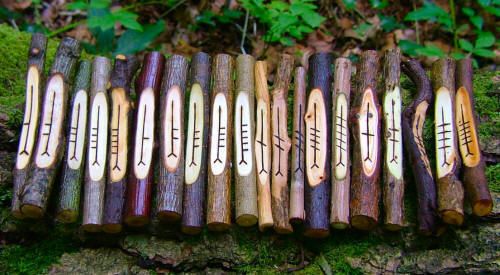
When practicing divination, many Celtic pagans look to the wisdom of the Ogham. The Ogham began as an ancient British and Irish alphabet, consisting of twenty characters formed by parallel strokes on either side of, or across a continuous line. It evolved into a system of divination, largely due to the work of Robert Graves in his book The White Goddess. Each ogham symbol is associated with a specific tree and a divinatory meaning.
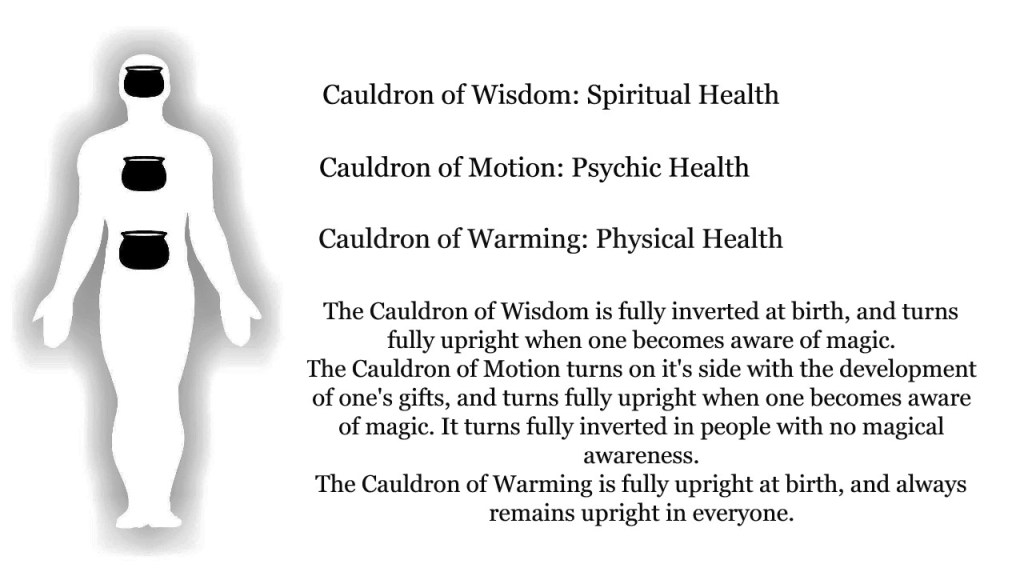
A 15th century Irish manuscript known as the “Cauldrons of Poesy” tells us that the human body contains three cauldrons. These cauldrons are located in the head, heart and belly of each person. The cauldron in the head is the Cauldron of Wisdom, ruling spiritual health. The cauldron in the heart is the Cauldron of Motion, ruling Psychic Health. The cauldron in the belly is the Cauldron of Warming, ruling physical health. These three cauldrons are similar to chakras, as each one represents various aspects of life. They are used in meditation, visualizing each cauldron in the upright position.
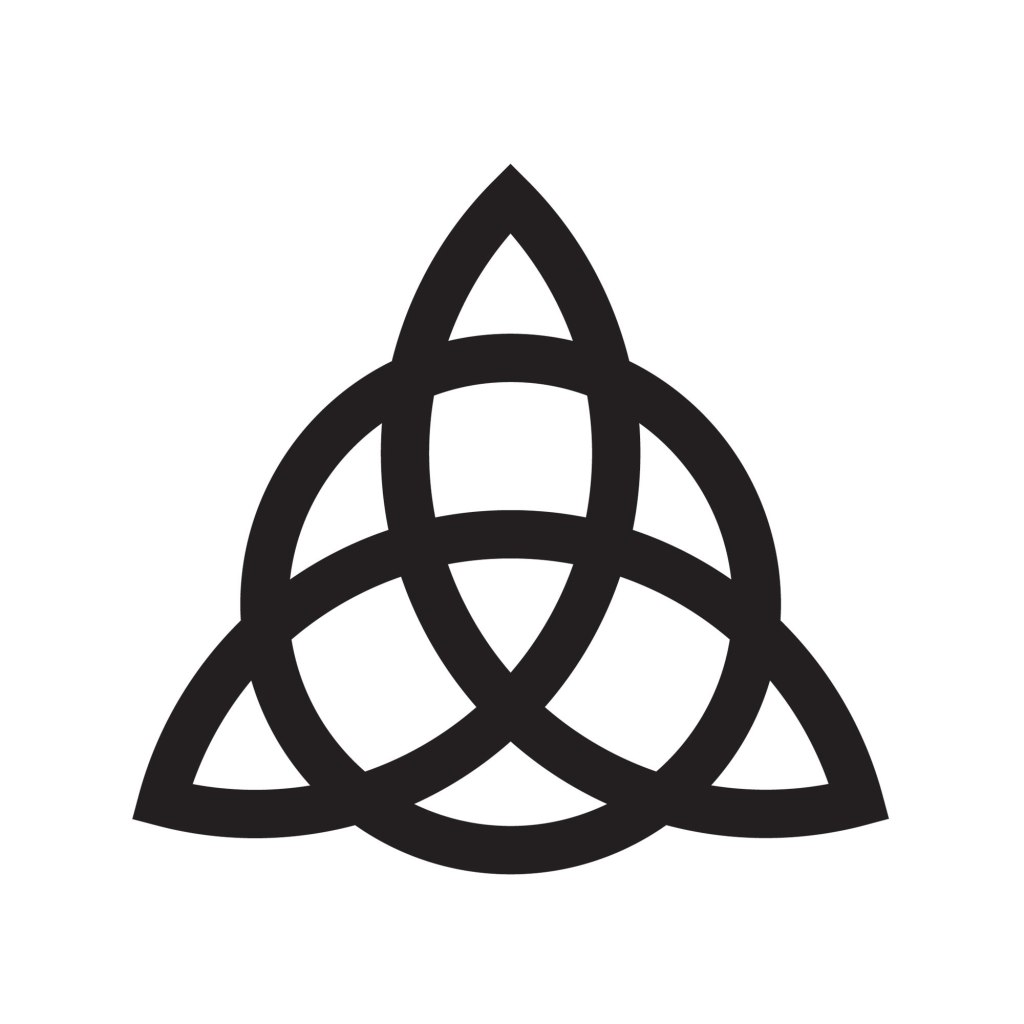
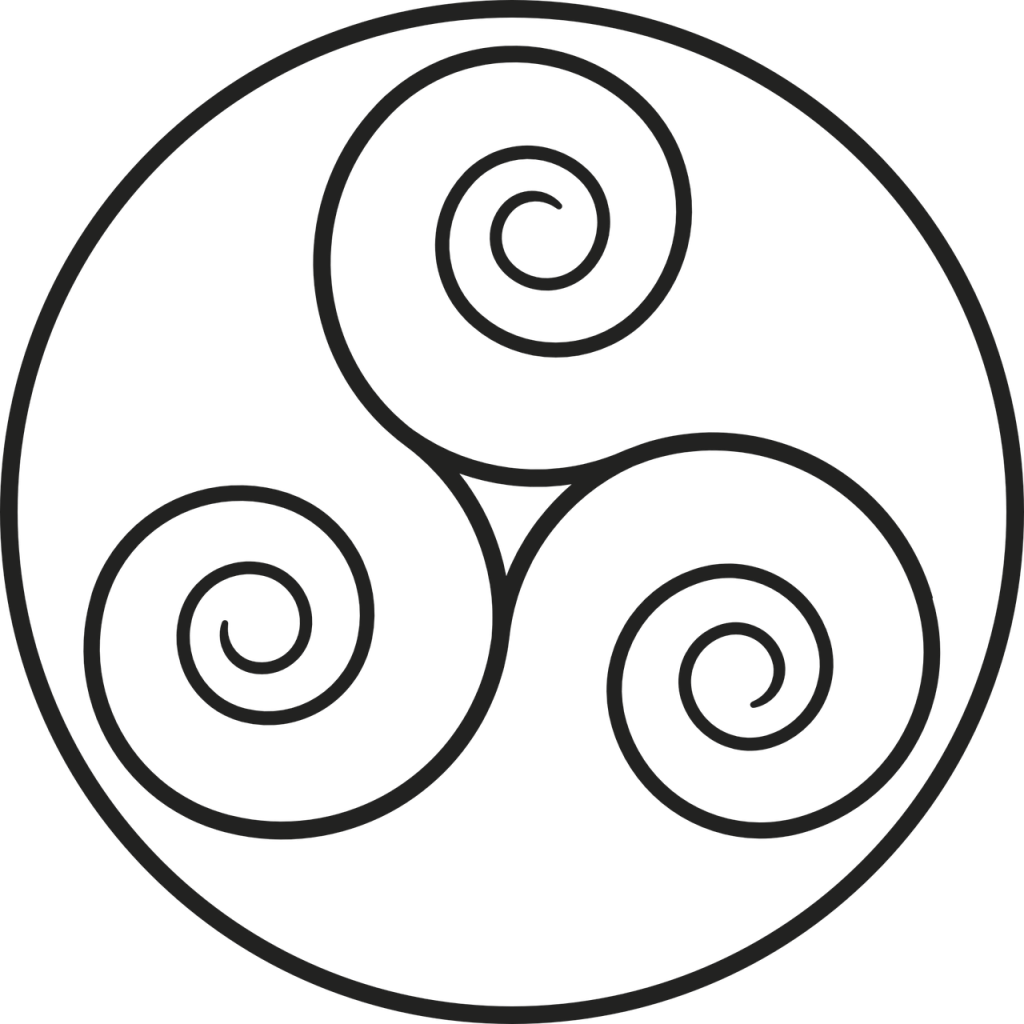
Symbols used in Celtic magic include the triquetra and the triskele. The triquetra is a Celtic knot symbol consisting of a triple knot with with a circle in the middle. The triskele is a triple spiral that appears to be in motion, as if it is spinning. Both of these symbols represent the Land, the Sea and the Sky. They can be carved onto candles or drawn on parchment paper when casting spells. Objects with these symbols can be placed on your altar. Other imagery can be used, such as pictures of Stonehenge, Brigid’s Cross or figures of animals that appear in Celtic lore.
There are many facets of Celtic magic, and this article only addresses a few of them. The Celtic tradition is rich with symbolism and mystical lore. Those who hear the whispers of the stone circles and the misty moors are invited to draw close to the ancient gods of Ireland, Scotland and Wales.
 MORDRED