The Witch’s Book of Shadows

The ‘Book of Shadows’ is shrouded in mystery and mysticism. Nearly every Witch has one, and while many may look similar on the outside, the contents therein are unique and individual to the Witch who owns it. Some say the Book of Shadows is a product of modern Wicca, however there are mentions of handwritten books kept by Witches as far back as the 17th century. There is also some confusion as to the difference between a Book of Shadows and a Grimoire. Many use the two words interchangeably, but there is a slight difference.

A Grimoire is a book (or portion thereof) that contains only spells and rituals. Many Witches have a Grimoire contained within their Book of Shadows. For most modern Witches, when we speak of a Book of Shadows, it is usually assumed that it contains a Grimoire. In my own Book of Shadows, I do have spells and rituals recorded, but they are not kept in a special section labeled “Grimoire”. They are interspersed throughout the book, with other information. There is no hard and fast rule about where to put things, although I prefer to record the herbs and plants all together at the end of the book, which makes them easier to find.

A Book of Shadows may contain a Grimoire, but it can also have other information. Herbs, correspondences, magical studies, meditations, drawings, symbols, lore and legends, personal observations, divination tips or any other info that the Witch has found personally useful in their own practice can be documented in a Book of Shadows.

So where does one find a Book of Shadows? Some simply use a special journal or a notebook, while others have large, elaborate tri-fold books that have 1,000 pages and weigh a ton. There are a few websites where you can purchase handmade Books of Shadows, but they are priced in the hundreds of dollars and take months to produce. If you are willing to invest the money and time, go for it. Or, you can use something a bit smaller, less expensive and more practical. It’s really up to you what you want to use, but I will offer a few suggestions. You may go through several, as I did, before you find the one you really like.

The magical journals of Old World witches were hand-written on parchment paper, using special inks and writing instruments, such as a feather quill. Dragon’s Blood Ink or India Ink are popular choices, as they take longer to break down. On the other hand, if something else works better for you, (or is more affordable), then use it. Some hardcore traditionalists would cringe at the thought of using colored pencils, stencils or rub-ons in their Book of Shadows, but I use them frequently.

Suggestions:

  • Look for something that fits your personality. Many seem to want something they have seen in movies or on TV, such as the Charmed Book of Shadows. Don’t fall into the pop culture trap. Find something that represents you.
  • Simple is often best. Instead of going for a mass-produced Book of Shadows covered with symbols or drawings, find something with a blank cover that you can personalize and decorate yourself. I prefer to leave my cover unadorned.
  • Don’t get something too small. Journals and notebooks are great, but eventually they will be full and you’ll have to start another one. I recommend looking at artist sketchbooks in hardcover. You can find them in larger sizes with 200+ pages and they are made specifically for those who paint or draw. There are also some gorgeous leather-bound books of parchment paper, which is what I use. Check your local art stores or look online to get a better variety. Consider your Book of Shadows a sacred object. The contents within are for your eyes only, hidden from public view and away from prying eyes. When not in use, keep it wrapped in a natural fiber.

My own Book of Shadows, which I have named Llyfr o Dewiniaeth (Welsh for ‘Book of Magic’) is a large leather-bound book of parchment pages that have been given an antique appearance. I found this on Amazon, of all places. The pages are quite thick and suitable for writing, drawing or even painting on. It is a rare thing for me to share photos of my sacred book of magic, but here you only get to see the first page with it’s name. This book is one of my most prized possessions.
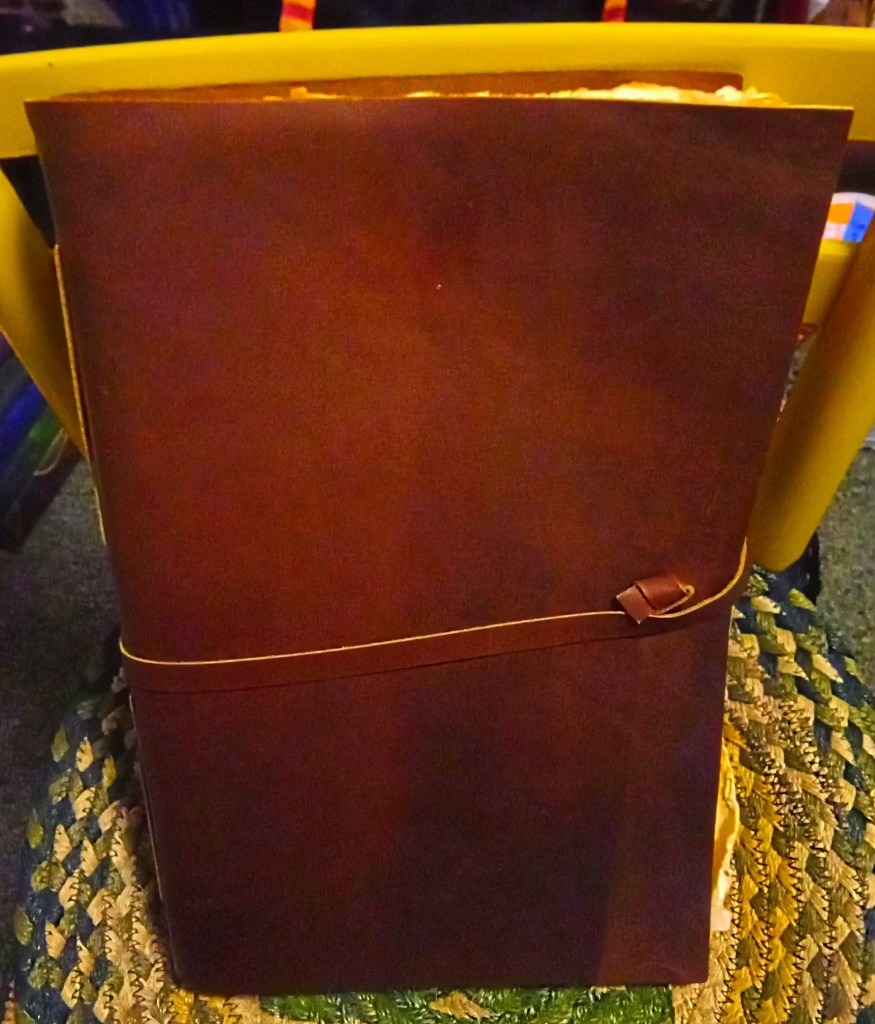
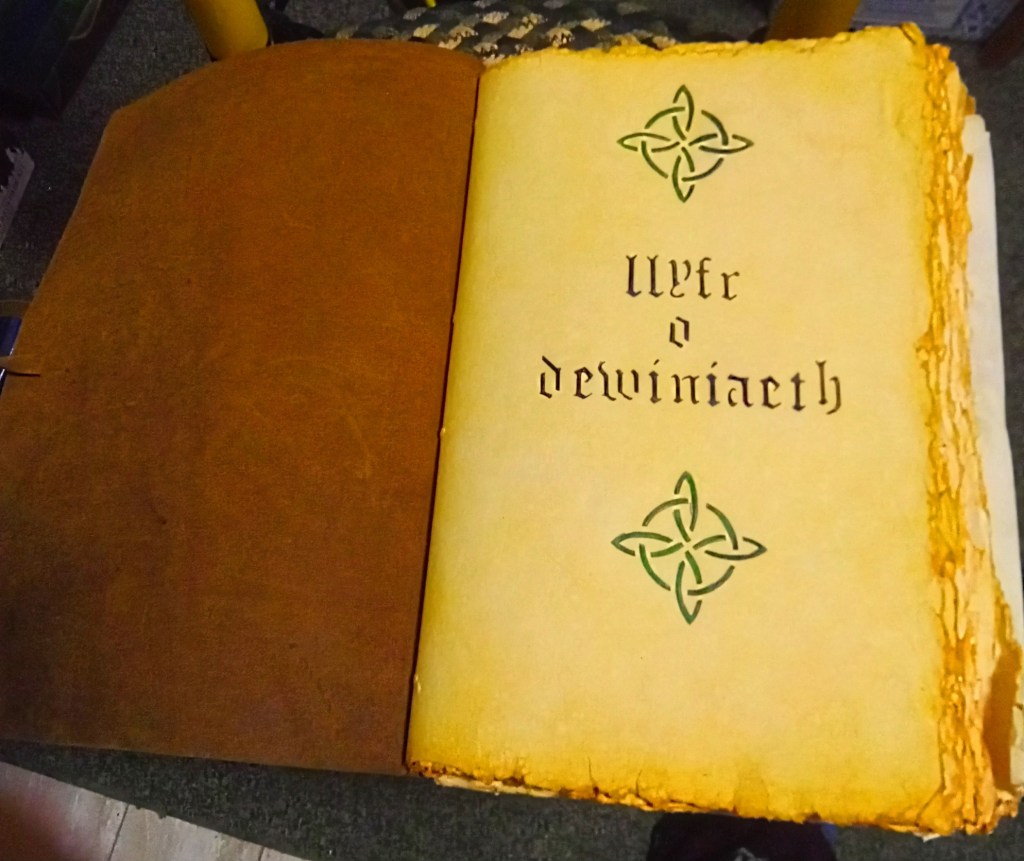
I want to emphasize again about not getting something too small. It is kind of a drag transferring everything from a smaller book into a larger one, and is very time-consuming. The larger ones are more expensive, but are well worth it in the long run. In my own book, I document the spells, rituals and magical information that I use most often, including information from books and teachers that have been most meaningful in my life and personal path. Do not just put random information in your book, but only that which has the most meaning for you and that which you will use on a regular basis. Your Book of Shadows, or whatever you choose to call it, is meant to be personal and an extension of your magical identity.

When Spells Don’t Work

Magic can be tricky, and there are some things that can make your spells ineffective. Take note of the following list when planning your magical workings.

  • Energy Failure: If energy is not raised properly or is not allowed to reach it’s peak, it is likely your spell will not manifest. Practice different forms of energy raising techniques, such as chanting, dancing or burning parchment with a written intention to discover which works best for you.
  • Doubt: If you do not believe in what you’re doing and you really don’t think it will work, then chances are it will not.
  • Unclear Intention: Know exactly what you want. Be specific. If you are indecisive or unclear, nothing will manifest for you. If you are not specific enough, you may get what you want, but with unpleasant strings attached.
  • Don’t Talk About It: Telling your friends or posting on social media about the spell you cast last night is a sure way of bringing that energy back to you and disabling your spell. Remain silent about your spellcasting. Skeptical friends or outsiders who have negative opinions about spells and magic can bring their harmful energy into the process. Your best bet is to be silent about your magical workings until they have manifested into physical reality.
  • Weak Will: If your will is not strong enough or if you’re really not sure it is what you want, this can also sabotage your spell. Be commanding and know that it is yours.
  • Lack of Follow-Up: If you cast a job spell but you don’t submit any resumes or go on interviews, you can’t expect to get that job. Follow up is important.
  • Scattered Correspondences: If the symbols and energies you use in your spell do not have any association to the outcome, there is a good chance your spell will not manifest. Like attracts like.
  • Mercury Retrograde: It is a matter of debate whether or not it is a good idea to do spellwork while Mercury is in retrograde. A good rule of thumb is, if it bothers you, then don’t do it. If you feel confident enough to cast your spell, and it cannot wait until Mercury goes direct, then cast it. Some practitioners include in their spell “I neutralize the power of Mercury in Retrograde“.
  • Lack of Full Attention: If you are distracted or in a hurry while casting your spell, then it is not likely to have the effects you want. Wait until you can be undisturbed and give the spell all of your attention and focus.
  • Violation of Free Will: This is a rather grey area, as these kinds of spells do work, but with repercussions. Magic that is used to control others or make them do something they would not otherwise do is a dangerous practice. The power of suggestion is real, however, the only way another person can use magic to violate another’s free will is if there is already a weakness or foothold in the area of suggestion. It is very important that those who work with magic constantly examine themselves, We must discipline our minds and work to take control of our fears, anxieties and passions. It is not an easy task.
  • Moon Phases and Planetary Energies: These can work against you if your spell is cast during unfavorable times. Be aware of current moon phases and planetary hours to get more power behind your spells.
  • True Will and the Plan of the Universe: There are times when we may cast a spell that is not for our highest good, and does not fit within the plan of the universe. There may in fact be something even better for us on the horizon, and a particular spell may not be aligned with our true will. It is important to include in our spells an intention of “for the highest good” and an outcome that is “perfect and correct”. It is equally important to focus on the outcome of your spell and not on how it manifests.

The casting of spells is an art and a science. There are many factors that come into play. This is not an exhaustive list of things that can wreck your spell, but they are some important ones. Plan your spells carefully.

Benefits of a Structured Practice

I have encountered many pagans who have a practice that seems rather chaotic and random, with no rhyme or reason, and approach it with a sort of casual “whatever I feel like today” attitude. There is no discipline or consistency to their practice. Many become “Eclectic” witches, because they don’t want to be limited to one particular system or pantheon. This buffet-style paganism seems to work for some, but leaves others feeling their energies scattered and ungrounded.

My practice has remained largely unchanged for the last ten years, but it is still just as vibrant and alive as ever, because it is based on connection and relationship. While it is very structured, it still allows room for growth. I will share my practice with you, and give suggestions on how to develop your own. In the meantime, consider the following:

  • What deity figures, gods and goddesses do you feel the strongest connection with?
  • Which crystals and stones do you use most often?
  • What flowers, herbs and plants, if any, are the most important to your personal practice?
  • Consider your magical skills. Perhaps you’re a tarot reader or a Reiki practitioner. Would you like to develop these skills further?

Below is a brief outline of my yearly practice. You will see that even though it has organization and structure, there is room for growth and versatility. I have strong connections to the Celtic current and it’s magical systems, so this is what I work with exclusively. You may choose to work with others of your choice. I present this only as an example, so that you can use it as a template for your own personal practice.

January

  • Deity: Cu Chulainn
  • Plant: Valerian
  • Stone: Citrine
  • Weekly Divinations
  • Rituals: Full Moon and New Moon
  • Reading and Study
  • Meditation

February

  • Deity: Brigid
  • Plant: Hyssop
  • Stone: Rose Quartz
  • Weekly Divinations
  • Rituals: Imbolc, Full Moon/New Moon
  • Make Brigid’s Cross for altar
  • Reading and Study (Tending Brigid’s Flame by Lunaea Weatherstone)
  • Meditation

March

  • Deities: Cerridwen and Taliesin
  • Plant: Blackthorn
  • Stone: Green Aventurine
  • Weekly Divinations
  • Rituals: Spring Equinox, Full Moon/New Moon
  • Crafting and Consecrating a New Wand
  • Reading and Study (Mabinogion, Cerridwen by Kristoffer Hughes)
  • Meditation

April

  • Deities: Dian Cehct and Airmid
  • Plant: Mandrake
  • Stone: Moonstone
  • Weekly Divinations
  • Rituals: Full Moon/New Moon
  • Reading and Study
  • Meditation

May

  • Deity: Cernunnos/Herne/Green Man
  • Plant: Sage
  • Stone: Clear Quartz
  • Weekly Divinations
  • Rituals: Beltane, Full Moon/New Moon
  • Make a new batch of Personal Oil
  • Reading and Study (Three Cauldrons of Poesy)
  • Meditation

June

  • Deity: Manaanan Mac Lir
  • Plant: Lavender
  • Stone: Amethyst
  • Weekly Divinations
  • Rituals: Summer Solstice, Full Moon/New Moon
  • Visit to Peace Valley Lavender Farm
  • Make a new Crane Bag
  • Astral Projection/Psychic Travel Exercise
  • Reading and Study
  • Meditation

July

  • Deity: Rhiannon
  • Plant: Marigold
  • Stone: Lapis Lazuli
  • Weekly Divinations
  • Rituals: Full Moon/New Moon
  • Reading and Study (The Song of Amergin)
  • Meditation

August

  • Deity: Lugh
  • Plant: Yarrow
  • Stone: Tree Agate
  • Weekly Divinations
  • Rituals: Lughnasadh, Full Moon/New Moon
  • Re-dedicate skills and abilities to Cerridwen and Community
  • Craft new Protection Amulets and Talismans
  • Dragon Magic
  • Reading and Study
  • Meditation

September

  • Deity: Mabon
  • Plant: Cinquefoil
  • Stone: Selenite
  • Weekly Divinations
  • Rituals: Autumn Equinox, Full Moon/New Moon
  • Reading and Study (Mabon story from The Mabinogion)
  • Meditation

October

  • Deity: Morrigan
  • Plant: Wormwood
  • Stone: Black Obsidian
  • Weekly Divinations
  • Rituals: Samhain, Full Moon/New Moon
  • Craft a new Ancestor Bottle
  • Craft a new batch of Ancestor Incense
  • Reading and Study (Celtic Lore and Spellcraft of the Dark Goddess, by Stephanie Woodfield)
  • Meditation

November

  • Deity: Dagda
  • Plant: Mugwort
  • Stone: Hematite
  • Weekly Divinations
  • Rituals: Full Moon/New Moon
  • Reading and Study
  • Meditations

December

  • Deity: Cailleach
  • Plant: Mistletoe
  • Stone: Snowflake Obsidian
  • Weekly Divinations
  • Rituals: Winter Solstice, Full Moon/New Moon
  • Craft a new Silver Branch
  • Reading and Study
  • Meditations

This is not an exhaustive list of everything I do each month, there are other more specific things I could have added, but I did not want to make it too confusing. As you can see, there is room to be flexible on various things, such as study material or forms of divination. I typically use tarot, oracles, pendulum and crystal ball. I practice various forms of meditation, including chant and creative visualization. There are certain things I do at specific times of the year, such as wand making in the spring and protection talismans in the summer. Add practices that are meaningful to you in your own yearly devotionals.

By working with the same deities, plants and stones on a consistent basis, you develop a stronger connection to them. You can use this same format to choose which of these you will focus on each month. Many people have one specific deity they are closest to, and for me that is Cerridwen. I acknowledge her in all of my rituals and her statue is on my altar year round, but there are other deities I draw near to each month as well. It is my hope that sharing my yearly practice will help others develop their own. You will find that a structured practice such as this will be more meaningful than one that is scattered and disorganized. After all, you will be working with the deities, plants and stones that you have the strongest connection to, and learning more about them each month. Discipline and consistency are key elements to developing strong relationships with our magical allies.